Halton isn’t one kind of place. It runs from Burlington on the Lake Ontario shore, through Oakville, up to fast-growing Milton, and out to Halton Hills — Georgetown, Acton, and the rural country beyond. Lakefront condos, century homes, brand-new subdivisions, and farmhouses on the Niagara Escarpment, all in one region.
So “attic insulation in Halton” doesn’t have one answer. What your attic needs depends on where in Halton you are and how old your home is. Here’s the region-wide guide, by area.
The one thing every Halton home shares
Wherever you are in Halton, the number that matters is the measured depth in your attic today — not the year the house was built.
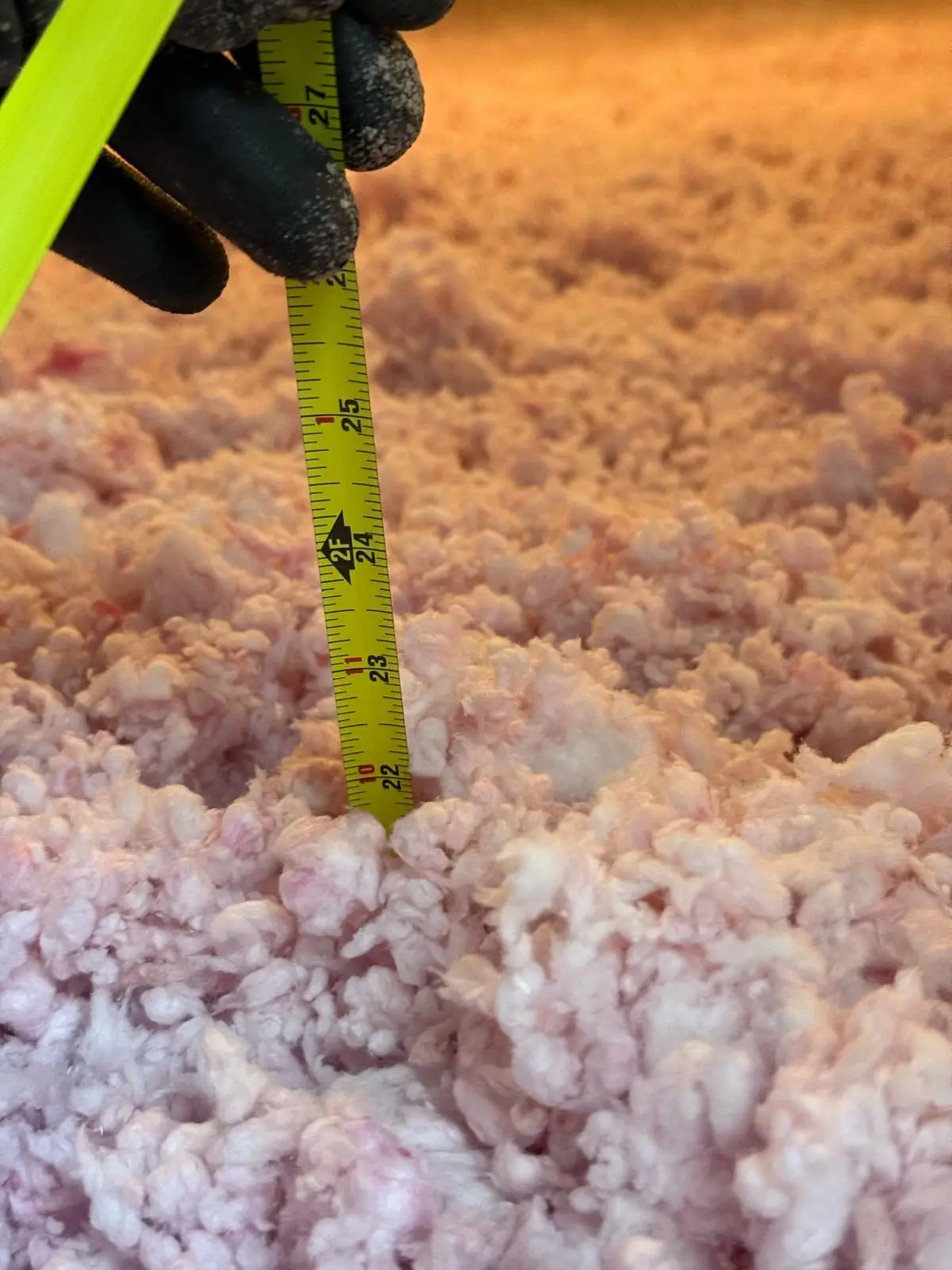
Check it in five minutes:
- Open the hatch, light on, step only on joists
- Push a ruler to the drywall at several spots, including near the eaves
- Convert:
| Material | R per inch | 8 in | 12 in | 16 in |
|---|---|---|---|---|
| Blown cellulose | ~3.4 – 3.8 | ~R-28 | ~R-42 | ~R-56 |
| Blown fibreglass | ~2.7 – 3.0 | ~R-22 | ~R-34 | ~R-45 |
| Settled batts | ~2.5 – 3.2 | ~R-22 | — | — |
Target: R-50 minimum (rebate threshold), R-60 as the goal.
Now, by area.
Burlington — lakeshore, and a wide range of ages
Burlington runs from the Lake Ontario waterfront up toward the escarpment, with housing spanning older lakeside neighbourhoods, established mid-century areas, and newer development up the hill (Alton and beyond).
Older lakeside and central Burlington homes often have the classic older-home profile: insulated to a past standard, settled, and leaky, with air sealing frequently the highest-impact fix. Watch for vermiculite in older attics (loose greyish granules that can contain asbestos — don’t disturb, have it tested). Attic insulation removal →
Newer north Burlington homes tend to have the production-build shortfalls: settled loose-fill, missing baffles, a bare hatch, and an unsealed ceiling.
Lake proximity means Burlington homes can see more ambient humidity, so attic moisture and ventilation are worth checking, not just R-value.
Halton Hills — Georgetown, Acton, and the rural escarpment
Halton Hills is the region’s most rural face: the historic towns of Georgetown and Acton, plus farmland and escarpment country.
Older Georgetown and Acton homes — the historic cores have century and pre-war housing that usually started with little insulation, is leaky, and benefits enormously from air sealing plus a proper top-up. Uninsulated walls are common; where you can’t open them, drill and fill insulates through small holes. Drill and fill →
Rural Halton Hills homes — farmhouses and country properties, often on the escarpment, and frequently on propane or oil rather than natural gas. That matters: propane and oil cost more to heat with, so insulating an under-insulated rural attic pays back even faster. (And you don’t need gas to qualify for the rebate — more in our Halton rebate guide.)
Escarpment exposure — higher, windier locations lose heat faster and see more ice damming, making air sealing and full-depth coverage to the eaves especially valuable.
Oakville and Milton — quick note
Oakville and Milton are both in Halton, and both are covered in depth on their own pages. In short: Oakville‘s older and lakeside homes often have attic moisture and ventilation issues worth checking alongside R-value; Milton‘s overwhelmingly newer homes are usually below standard from builder-minimum insulation plus settling, despite being “new.” Wherever you are, the fundamentals below apply.
The fundamentals — everywhere in Halton
Whatever your area or home age, three things do the heavy lifting:
1. Air seal the ceiling first
Insulation slows heat conduction; it barely touches air movement. Sealing the ceiling penetrations — wiring, plumbing stacks, top plates, light fixtures, the hatch — comes before insulation. In older and windier (escarpment, lakeshore) locations especially, this is the biggest lever.
2. Ventilation and baffles
Blown-in buries soffit vents unless baffles hold them clear. Blocked venting causes moisture and ice dams. Baffle installation →
3. Full depth, to the eaves
The perimeter is shorted most often and sits right over your rooms. R-50 minimum, R-60 target.
The cold room over the garage, if you have one, is a garage-ceiling job, not an attic one — separate fix. Garage ceiling insulation →
What a proper job looks like
- Assess — measure depth, identify material, check for vermiculite (older homes), check ventilation and penetrations
- Test or stop for vermiculite where present
- Remove only if contaminated
- Air seal the ceiling plane
- Install baffles, confirm soffit intake
- Insulate and weatherstrip the hatch
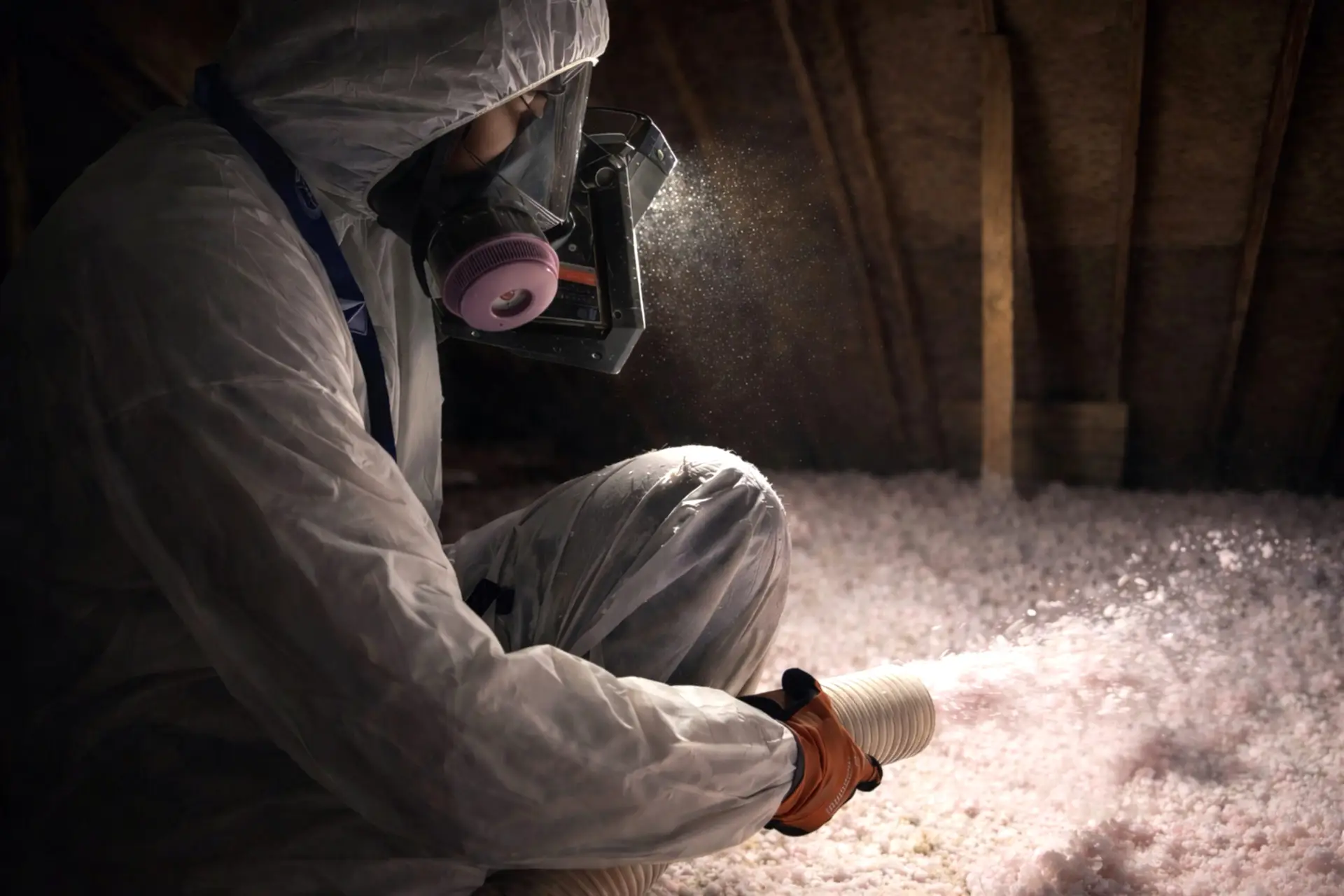
- Blow to depth, to the eaves — R-50 minimum, R-60 target
- Mark depths so the result is verifiable
On material: cellulose is denser and reaches the target in less depth; fibreglass is lighter and often a bit cheaper. Both rebate-eligible. Cellulose → · Fibreglass →
Frequently asked questions
Do you serve all of Halton? Yes — Burlington, Oakville, Milton, and Halton Hills (Georgetown, Acton) and the rural areas around them.
I’m in rural Halton Hills on propane. Is insulation worth it? Yes — more than for a gas home, because propane costs more to heat with. And propane homes still qualify for the rebate.
My Burlington home is near the lake. Anything different? Lake proximity can mean more humidity, so it’s worth checking attic moisture and ventilation, not just insulation depth.
What’s vermiculite? Loose greyish granules in some older attics; can contain asbestos. Don’t disturb it — have it tested first.
Do I have to remove old insulation? Only if contaminated or vermiculite. Otherwise new goes over old and R-values add.
Do I have to leave home during the work? No.
Get a free assessment anywhere in Halton
Wherever you are in the region — lakeshore Burlington, historic Georgetown, rural Acton, or anywhere between — the first step is finding out what your attic actually has. A proper assessment measures it and tells you what it needs.
Pro Insulation Contracting has insulated Ontario homes for over 10 years and serves all of Halton Region. Free on-site assessment, written scope, fixed price before any work starts.
📞 (416) 315-0471 · Book a free attic assessment →